We like to keep you up to date on activities within InsTech Netherlands and on future news, events, developments and innovations.
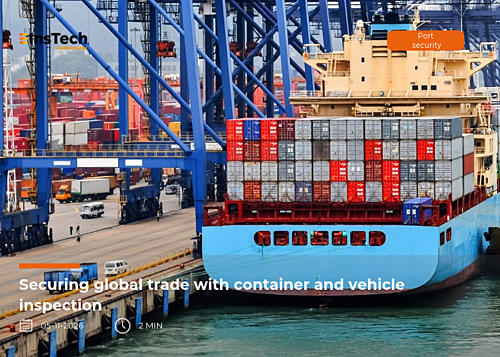
05/11/2026
-
Blog post
Ports are frontline hubs in the fight against drug trafficking and smuggling. Discover how container and vehicle inspection systems help ports detect contraband faster and more accurately, without slowing down trade.
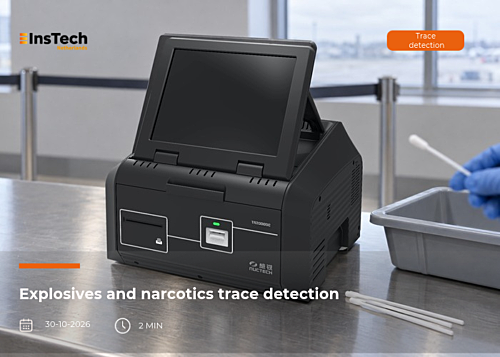
30/10/2026
-
Blog post
At InsTech Netherlands, we continue to develop and provide cutting-edge security inspection solutions that make a real difference in aviation, customs, and public safety.
Not every threat is visible on an X-ray image. Discover how ion mobility spectrometry and Raman spectroscopy detect explosives and narcotics within seconds, and when to use which technology at your checkpoint.
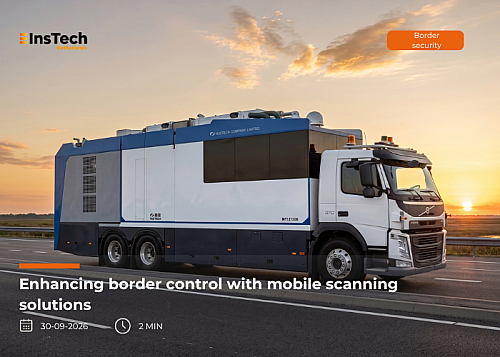
30/09/2026
-
Blog post
Mobile scanning solutions give border control agencies the flexibility to inspect vehicles and cargo wherever additional screening capacity is needed. Discover how mobile inspection systems can support efficient, secure and adaptable border operations.
23/09/2026
-
Blog post
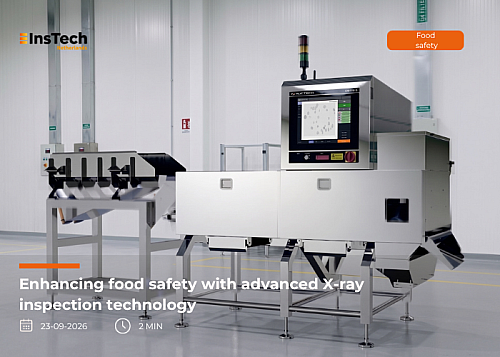
Food safety depends on detecting potential contaminants before products reach consumers. Advanced X-ray inspection technology helps food manufacturers identify foreign objects, strengthen quality control and maintain efficient production processes.
21/08/2026
-
Blog post
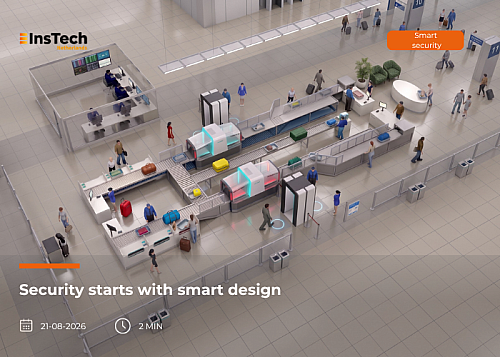
Security by design means that safety and security are included from the very start in the design of terminals, seaports, border facilities, stadiums and public locations. This prevents security from being added later as a separate layer to a building or site.

17/07/2026
-
Blog post
In the security industry, advanced technologies are becoming increasingly important for identifying threats quickly and effectively. One of the groundbreaking innovations in this field is the use of deep learning (a subset of artificial intelligence (AI))to detect suspicious substances in cargo and baggage. Deep learning enables the faster and more accurate identification of hazardous substances, such as explosives, drugs, and weapons, than ever before. But how does this technology work exactly, and why is it so powerful for security purposes?

03/07/2026
-
Blog post
In today's world of security technologies, energy efficiency and sustainability are becoming increasingly central. Security systems, such as baggage scanning and body scanning equipment, play a crucial role in ensuring safety but often come with a significant environmental footprint. Thankfully, technological innovations are making it possible to make these systems both more sustainable and energy-efficient, without compromising performance.

19/06/2026
-
Blog post
With the European Union set to introduce the Entry/Exit System (EES) in 2026, Dutch border authorities are under increasing pressure to modernize their screening processes, particularly at key ferry terminals such as Hoek van Holland, IJmuiden, and Rotterdam. The EES will replace manual passport stamping with digital registration, requiring biometric data and detailed travel logs for every non-EU traveler entering or exiting the Schengen Area.
For travelers arriving in the Netherlands by car and ferry from non-EU countries, the new regulation introduces a unique operational challenge: ensuring high-level security without disrupting the flow of cross-border traffic.